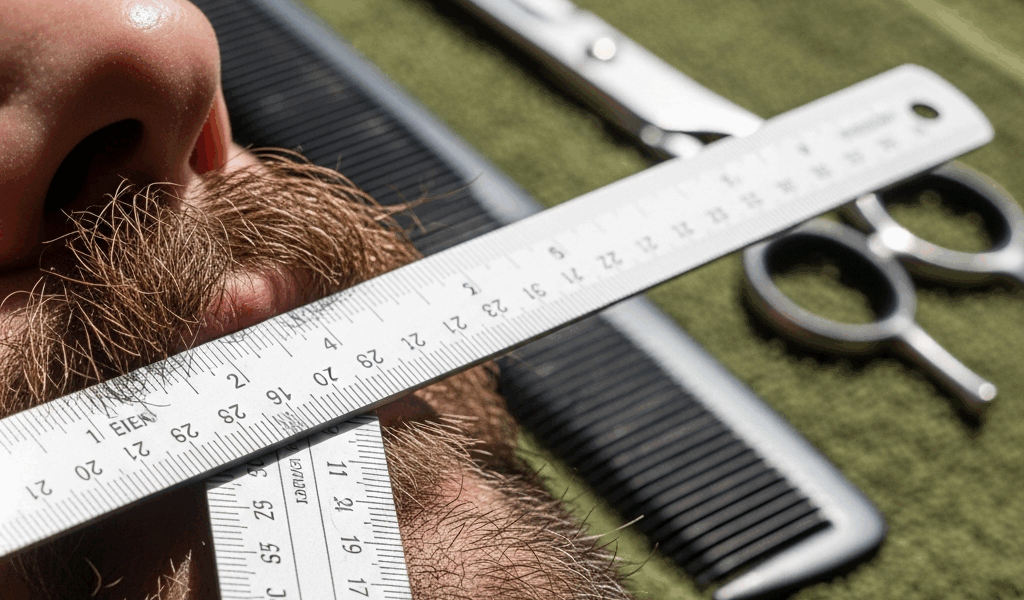
Why Your Mustache Keeps Getting Flagged Even When You Followed the Rules
Military grooming standards have gotten complicated with all the conflicting interpretations flying around. As someone who spent years watching servicemembers fail inspections they genuinely prepared for, I learned everything there is to know about this specific problem. Today, I will share it all with you.
The frustration is real. You grew it out for three weeks. The mirror said you were good. Then inspection day came and someone flagged you anyway. I’ve tracked this pattern long enough to know the culprits are almost always the same three things: corners shaped wrong, hair crossing the lip line, or uneven density that reads sloppy even when you’re technically within limits.
This isn’t for the guy doing abstract policy research. This is troubleshooting. You’ve already tried once — maybe twice — and you need specifics.
Getting the Width and Corner Shape Actually Right
The lateral endpoint — where your mustache sides actually terminate — matters more than anything else you’re managing. Most guys get this wrong because they’re working from intuition instead of anatomy.
But what is a compliant corner shape? In essence, it’s a clean endpoint that angles slightly upward and stops before descending toward the mouth corner. But it’s much more than that.
Start with your natural facial landmarks. Find the corner of your mouth. Then locate the line where your upper lip transitions into cheek — that vertical boundary is your reference point. The most common flagged mistake I see is letting the corners grow downward, curling toward the mouth corner itself. Looks fuller, feels like a win. Reads as undisciplined to whoever’s doing the inspection.
Corners should angle up, not down. They should terminate somewhere between the mouth corner and the outer cheek edge. Different branches interpret this differently — which is honestly where the whole conversation gets annoying fast. The Air Force generally wants a visible taper, a gradual narrowing from center to edge. Army and Marine Corps are more flexible on the taper itself, but both demand a clean line that doesn’t drop into the mouth area.
Use a small handheld mirror and natural side lighting. Watch where your whiskers want to grow at the endpoints. Some guys have hair that grows almost horizontally at the sides — those guys have it easier. If yours grows steeply downward by nature, you’re fighting that angle every single day. Don’t make my mistake of discovering this two inspections too late.
The Lip Line Rule and How to Measure It Without Guessing
Probably should have opened with this section, honestly. The upper lip vermillion border — that actual line where lip skin begins — is where most violations quietly live. Hair has to sit above it. Not touching it. Not shadowng it from underneath. Clearly above it.
Here’s the practical method most guys skip: take your phone and shoot a straight-on photo in natural light. Not the bathroom vanity light that deepens shadows artificially. Not studio lighting. Actual daylight or strong indoor ambient light. Look at that photo and ask yourself one question — does the shadow of the mustache fall onto your lip? If yes, you’re violating the rule. Even if the actual hair shaft clears the line, the shadow creates a visual violation that inspectors are trained to catch.
The fix is counterintuitive. Trim the underside more aggressively than feels right. The hair needs to sit far enough above the lip that even the shadow underneath doesn’t create visual contact. You’re not trimming top-down — you’re trimming from underneath upward, removing the density layer that generates the shadow in the first place.
I’m apparently someone who grows heavy mustache density low, and underside trimming works for me while top-line measuring never did. Failed three inspections before I figured that out. The moment I started focusing underneath rather than on the visible top edge, I passed every inspection for two years straight. Don’t make my mistake.
Self-check that actually works: flip your phone to selfie mode and study the photo standing in the same light where you’ll be inspected. Can you clearly see the outline of your lip? If the mustache shadow is obscuring it, you’re trimming more underneath today — not the morning of inspection.
Trimming Tools and Technique That Hold the Line Between Haircuts
The tool matters. A lot.
While you won’t need a professional barber setup, you will need a handful of quality tools. A beard trimmer with adjustable guards is non-negotiable. The Panasonic ER-GB80S runs about $70 and holds guard sizing with the precision this work demands. A #0.5 or #1 guard works for most guys on underside trimming. Don’t go shorter — visible skin looks worse than a slightly thicker mustache, and you’ll trade one problem for another.
Scissors alone on the lip line might be the worst approach, as mustache maintenance requires consistent density control. That is because scissors create uneven results — some hairs shorter, some longer — and the overall shape reads unkempt even when measurements technically comply. Use the trimmer with a guard for underside work. Reserve scissors strictly for corner detail work after the guard pass is finished.
Trim every four to five days. Not every two weeks. The guys who wait accumulate enough length to re-shadow the lip line, and suddenly they’re back in violation territory wondering what changed. The guys who maintain frequently hold consistent shape and shadow depth. More maintenance — yes. Consistent inspection passage — also yes. That’s the trade.
Corner shaping is freehand scissors work after the guard trimming is complete. Cut small amounts. Check the mirror. Adjust. Repeat. The mistake is overcommitting to a corner angle with one confident cut. That was me in 2019. Go small.
What to Do When Your Natural Growth Pattern Makes Compliance Hard
Some facial hair patterns are genuinely difficult to work with. Sparse corners that refuse to fill in. Hair growing at steep downward angles regardless of what you do. Follicles spreading wider than regulation width naturally allows. That’s what makes this problem endearing to us servicemembers who care about getting it right — there’s no universal solution.
So, without further ado, let’s dive in.
Sparse corners? The answer isn’t product. It’s acceptance. You cannot grow density where follicles don’t exist — no pomade, no wax, no technique changes that math. The workaround is trimming the whole mustache shorter and narrower to build visual symmetry. Proportionally shorter looks fuller. It’s not obvious until you try it.
Frustrated by downward-growing hair that defeats every attempt at compliance, many guys discover mustache wax using pea-sized amounts applied each morning. This new habit takes off after a few days of practice and eventually evolves into the reliable routine grooming-conscious servicemembers know and depend on today. Daily upward brushing helps establish the angle. But if you’re doing this every single day just to survive inspection, have that conversation with your leadership now. Not after a surprise write-up.
The honest reality: some growth patterns require more frequent grooming than others. That’s not a technique problem. It’s a biology problem with a logistics solution — you’re just trimming more often. Plan around it instead of fighting it.
If you’ve genuinely worked through all of this — the underside trimming, the frequent maintenance schedule, the careful corner shaping — and you’re still getting flagged, the issue might be a communication gap between you and your inspector rather than a grooming failure. Have the direct conversation. Bring photos of previous attempts. Ask specifically what’s failing. You might find out the interpretation being applied is stricter than the actual written regulation. Better to surface that now than keep failing inspections over a standards disagreement nobody’s acknowledged out loud.




Leave a Reply