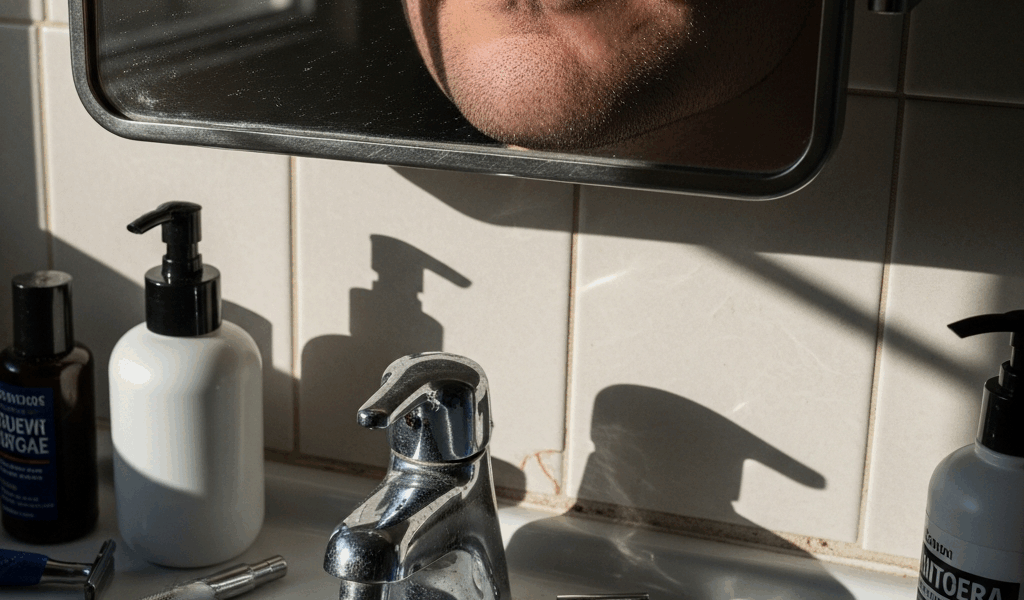
Why Your Military Mustache Looks Thin After Growing It Out
Military mustache advice has gotten complicated with all the bro-science and barbershop mythology flying around. You followed the regs. You put the razor down. You showed up to formation ready to finally have something worth showing — and instead there’s this sparse, patchy situation on your upper lip that looks like it gave up halfway through.
As someone who spent years shaving daily before attempting to grow a regulation mustache, I learned everything there is to know about why this happens and what actually fixes it. Today, I will share it all with you.
Two things are working against you. Biology — follicle density, androgen sensitivity, where you are in your natural growth cycle. And behavior — years of shaving habits that trained your hair to stay short and thin. Most real solutions need 6 to 12 weeks minimum. That part isn’t negotiable. So, without further ado, let’s dive in.
The Shaving History Problem Most Guys Miss
Probably should have opened with this section, honestly — it’s the single fastest way to kill a new mustache before it ever has a chance.
Here’s the thing nobody mentions: shave daily for five, ten, fifteen years and your facial hair gets stuck in a very short cycle. Not metaphorically. Those whiskers have never been allowed to become anything other than stubble. Every morning you removed them before they could figure out what they were supposed to be.
So when you finally stop? They don’t immediately turn thick and full. They have to relearn how long they’re allowed to get.
Week two through week five is brutal. The hair is long enough to be visible but not long enough to show actual density. Wispy. Scraggly. Some guys hit day 20, panic, and trim. That resets everything. Don’t. Leave it completely alone during this window — at least if you want to see what your mustache is actually capable of. No edge cleanup. No shaping the lines. No anything. Just let it sit there and feel awkward.
Around week six or seven, something shifts. Hairs that looked like individual strands start reading as actual coverage. They’re overlapping now, catching light differently, filling space that looked empty before. Your follicles didn’t change. The hair just needed length to perform. That’s what makes the growth phase endearing to us guys who stick it out.
Regulation shape shouldn’t get carved in until you can actually see what density you’re working with. That takes time. Don’t make my mistake of trimming too early and spending another month starting over.
Patchy Spots and What They Actually Mean
But what is patchiness, really? In essence, it’s your follicles growing at different rates and densities. But it’s much more than that — because not all patches mean the same thing, and treating them the same way is where guys go wrong.
Edge patchiness — thin or sparse spots along the sides or perimeter — is usually normal. Those are slower-growing follicles, but they’re still working. Length fixes this in most cases. Give it time.
Center gaps directly under the nose are a different story. That’s follicle density, and it’s harder to change. Some men simply have a lower follicle count in that exact spot, or the hairs there are finer in diameter. This one doesn’t fill fully for some guys. That’s genetics. No amount of beard oil or aggressive grooming is going to create follicles that aren’t there.
Sparse overall coverage usually traces back to androgen sensitivity — how responsive your follicles are to testosterone and DHT. Largely genetic. If your dad had a thin mustache, well. Expectations need to be realistic. That said, there are still things worth trying.
Here’s a practical workaround that actually works at inspection distance: grow slightly longer than minimum regulation length. A longer thin mustache reads as denser than a short thin one. Shadow, angle, viewing distance — all of it matters. A quarter-inch difference in length changes how thick it looks to someone standing three feet away.
What Actually Helps Thickness — and What Is Hype
While you won’t need some elaborate twelve-step regimen, you will need a handful of tools and some patience if you want real results.
Minoxidil — the generic topical version, sold as Rogaine or store-brand equivalents for around $25 to $40 per month — is used off-label on facial hair by guys who want to maximize what they’ve got. Not FDA-approved specifically for mustaches, but it works the same way it works on scalp hair: extends the growth phase, can increase follicle size over time. Apply it twice daily to sparse areas. Results take 4 to 6 months to show. Check with a doctor first, especially if you have any heart concerns. It’s not magic, but I’m apparently a responder and it worked for me while skipping it entirely never moved the needle.
Derma rolling might be the best low-cost option, as facial hair growth requires consistent blood flow stimulation. That is because the mechanical action of a 0.5mm to 1.0mm roller creates micro-stimulation that supports the growth process. A decent roller runs $15 to $30. No iron-clad clinical proof for facial hair specifically, but the mechanism makes sense and plenty of users report results. Low risk either way.
First, you should get sleep under control — at least if you want your hormones actually working for you. Testosterone and DHT drive facial hair growth. Chronic sleep deprivation, high stress, garbage nutrition — all of it suppresses both. Eight hours, strength training three times a week, real protein intake. Your mustache is part of your whole system. If the system is suffering, the mustache is suffering.
The shaving-makes-it-thicker myth? Dead. Shaving reveals the blunt tip instead of the tapered tip. That’s it. Brief optical illusion. Nothing more.
How to Style a Thin Military Mustache So It Looks Regulation Ready
At some point you hit your growth ceiling and work with what you have. Styling becomes the difference between thin and completely invisible.
Keep the bottom line clean and sharp. A precise edge makes thin coverage look intentional. Use a single-blade razor or an electric trimmer set to your regulation length. Sloppy edges make thin mustaches look thinner — full stop.
Don’t over-thin the top. If coverage is sparse, cutting bulk away makes everything worse. Trim length and shape. Leave the volume alone.
Mustache wax — Honest Amish, Fisticuffs, Grave Before Shave, all running $10 to $18 per tin — lays hairs flat, closes small gaps, and makes thin coverage read as denser. Work a small amount through with a fine-tooth comb, directing everything toward the corners. The wax doesn’t thicken individual hairs. It repositions them so they overlap better and catch light differently. The result reads fuller.
Lighting matters more than you’d think. That same mustache looks completely different under fluorescent overhead lights versus natural sunlight in your bathroom mirror. Know your worst-case inspection lighting and style for that, not for your mirror at home.
A thin mustache kept clean, trimmed regularly, and regulation-compliant beats a thick one that violates the line every single time. Make peace with what you have. Own it completely.




Leave a Reply