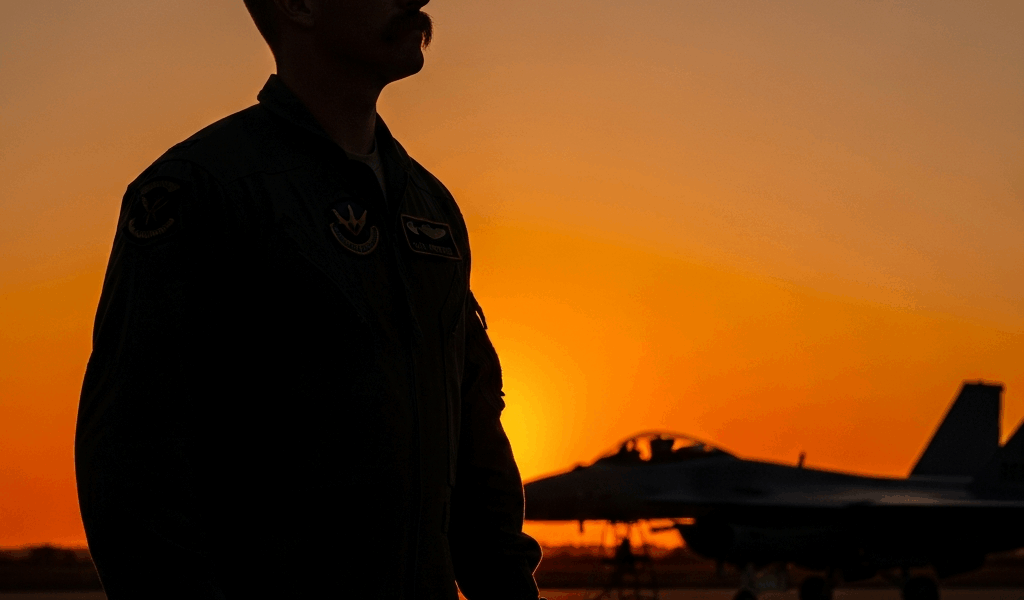
Mustache March — The Air Force Tradition Explained
Mustache March has gotten complicated with all the misconceptions flying around. Half the people who’ve heard of it think it’s some lighthearted joke — a quirky month where airmen stop shaving and call it a tradition. The other half know the name Robin Olds but couldn’t tell you why his mustache became a symbol worth honoring every spring. As someone who’s spent years embedded in Air Force culture, I learned everything there is to know about this tradition — and I’ll say this plainly: few things in military culture carry a backstory quite like this one.
Robin Olds and the Mustache That Started It All
Brigadier General Robin Olds was not a subtle man. Not even slightly. He flew 107 combat missions in World War II, shot down 12 German aircraft, and then — apparently deciding one war wasn’t enough — came back for Vietnam, where he added four more aerial kills to his record. One of only a handful of American pilots to reach ace status across two separate wars. That alone makes him legendary. The mustache, though — that’s where the story shifts into something else entirely.
But what is Mustache March, really? In essence, it’s a tribute to Olds grown on the faces of airmen every spring. But it’s much more than that.
During his command of the 8th Tactical Fighter Wing at Ubon Royal Thai Air Force Base in 1967, Olds grew a mustache that defied easy description — thick, drooping, somewhere in handlebar territory, a piece of facial architecture that violated Air Force grooming regulations pretty much by design. He wore it through Operation Bolo, a January 1967 mission he personally planned — tricking North Vietnamese MiG-21 pilots into an ambush by disguising F-4 Phantoms as slower F-105s. Seven MiGs downed in a single engagement. Tactically brilliant doesn’t quite cover it.
Frustrated by his return stateside and the institutional attention suddenly focused on his face, Olds held his ground — at least long enough to make sure the order to shave was formally documented. The story gets repeated at every O-Club worth its salt. His reported response was something close to: the mustache was the only thing he owned that the Air Force couldn’t take from him. Different versions of that quote circulate. The sentiment stays consistent across all of them.
The mustache was defiance made visible. A statement — worn in plain sight — that even inside a rigid institutional structure, there’s still a specific human being in the flight suit.
Inspired by Olds, airmen started growing mustaches each March — his birth month — as a tribute. Not a policy. Not a memo from a general. A gesture. That’s the whole origin right there.
How Mustache March Became Tradition
Probably should have opened with this section, honestly. Because understanding that this tradition is entirely grassroots makes the Robin Olds story hit differently.
There’s no founding ceremony to point to. No plaque. No official Air Force document declaring March the Month of Mustaches. This new idea took off several years after Olds’ story circulated and eventually evolved into the Mustache March that enthusiasts know and celebrate today — spreading the way most genuine Air Force culture spreads, through squadrons and TDYs and guys who heard the story at one base and carried it to the next assignment.
By the 2000s it was showing up consistently — active duty wings, Guard units, Reserve squadrons. Some units run full competitions. Best overall, best handlebar, most creative, most regulation-defying while technically still legal. Others keep it low-key, more of a personal choice than a structured event. That variation is part of what makes it feel real. Nobody’s enforcing participation. Enforcing it would miss the point entirely.
Unit commanders have different relationships with it. A squadron commander who grows his own mustache in March signals something — that the culture is healthy, that leadership doesn’t take itself too seriously. Others treat the whole thing as background noise, tolerated rather than embraced. The wings that go all in tend to have more fun in March. That’s an observation, not a judgment.
The tradition has also jumped branches. Navy and Marine aviators — especially those flying alongside Air Force units in combined operations — participate more than you’d expect. The mustache, apparently, doesn’t care about your branch patch.
The Rules of Mustache March
Here’s where people get themselves in trouble. Don’t make my mistake — or the mistake I watched a very confident A1C make in week three of March one year, when he showed up with something that belonged on a Civil War portrait and got counseled before lunch.
Mustache March is not a grooming regulation holiday. AFI 36-2903 doesn’t pause for March. What the tradition does is give airmen a reason to grow a mustache within the limits that already exist year-round — limits that are more specific than most people realize until they actually read them.
Current Air Force appearance standards require mustaches to be neat and conservative. The mustache cannot extend below the lip line — meaning it can’t cover the upper lip itself. It cannot extend horizontally beyond the corners of the mouth. No part of the mustache can exceed one-quarter inch in bulk — that’s the outward projection from the face, not individual hair length. A handlebar spreading past the corners of the mouth is out. A thick, full mustache staying within those corner boundaries is completely legal.
X might be the best option here — where X is “knowing the regulation cold before February ends” — as Mustache March requires precision, not improvisation. That is because commanders retain full authority to direct grooming corrections regardless of tradition. The cultural calendar doesn’t override the regulatory one. Keep that distinction airtight.
A few practical notes worth having. Start early — growing a mustache takes longer than most men expect before it looks intentional rather than accidental. By day five of March, a lot of guys look like they forgot to shave one specific section of their face rather than making a deliberate choice. Give it time. The mustache has to commit before the unit takes it seriously.
While you won’t need any special equipment or permission slips, you will need a handful of things: a clear-eyed read of AFI 36-2903, a decent razor for the shaping work around the edges, and — honestly — some patience. The payoff comes around week two, maybe week three, when it actually starts looking like something.
Famous Military Mustaches Through History
Robin Olds doesn’t stand alone here. Not even close.
General John “Black Jack” Pershing — commander of American Expeditionary Forces in World War I — wore one of the most photographed mustaches in military history. Clean, disciplined, trimmed to exact precision using what one imagines was a very small ruler. It matched his command style completely. Pershing’s mustache looked like it had been briefed on the operational plan and agreed to comply.
On the opposite end of things, General George Armstrong Custer wore a look — flowing hair, sprawling mustache drifting toward beard territory — that regulations in the 1860s apparently tolerated. Custer took full advantage of that flexibility. History has complicated opinions about Custer generally. The mustache, at minimum, was committed.
Arthur “Bomber” Harris — the controversial British RAF Marshal who commanded the strategic bombing campaign over Germany in World War II — had a mustache that was doing considerable work for his overall authoritative presence. British military culture through the Second World War was considerably more permissive about facial hair than American services have ever managed to be. That’s what makes Robin Olds endearing to us Air Force types — he found the edges of what was allowed and planted himself right there.
Jimmy Doolittle — of the April 1942 low-level B-25 attack launched from the carrier USS Hornet against Tokyo — occasionally wore a modest mustache in earlier career photographs. The images from the Raid itself are clean-shaven, all business. The man had range.
What connects these men, and what connects all of them to Robin Olds, isn’t just the facial hair. It’s the idea that a person operating inside a military institution remains a specific individual — with a specific face, making specific choices within whatever space the institution allows. The mustache, especially when it nudges the edges of what’s permitted, makes that visible.
Mustache March is the Air Force saying the same thing back to the memory of Robin Olds every spring. We remember the story. We know the regulation. We’re still here — and we’re growing the best mustache we legally can to prove it.



Leave a Reply