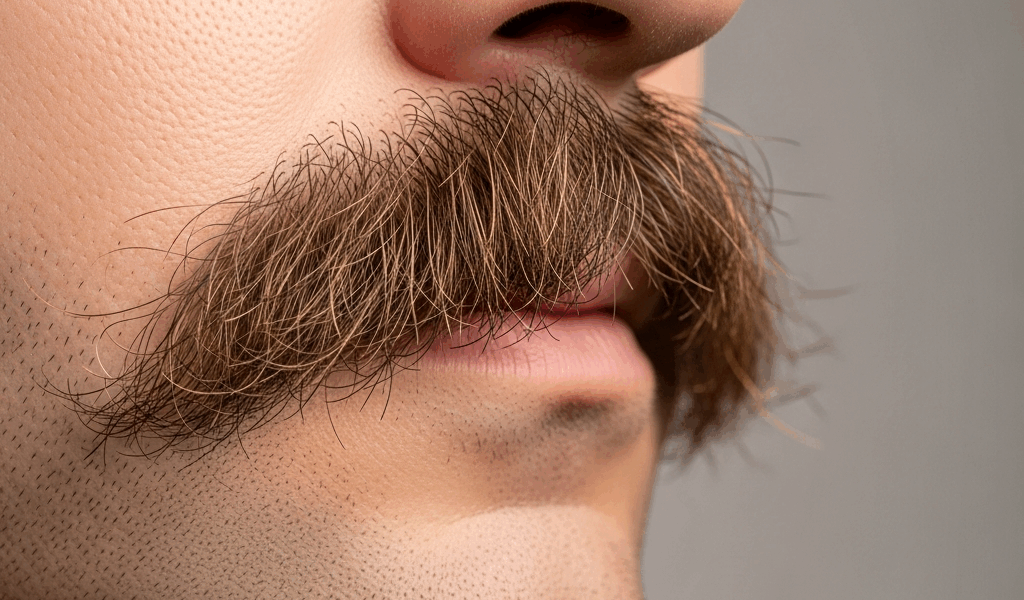
What Thin Sides on a Military Mustache Actually Mean
Military mustache grooming has gotten complicated with all the conflicting advice flying around. If you’re here, you’ve probably stood in front of the bathroom mirror for an embarrassing amount of time staring at those sparse corners — wondering why the center fills in just fine while the sides look like they’ve given up entirely. I’ve been there. Spent nearly two months making it actively worse before I figured out what was actually going on.
Today, I will share it all with you.
Here’s the thing though: thin sides don’t all trace back to the same problem. Sometimes it’s genetics. Sometimes it’s just time — or a lack of it. And sometimes — probably in your case, honestly — it’s you trimming too aggressively because you’re terrified of catching a uniform violation. These are three completely different situations requiring three completely different fixes. So we need to figure out which one applies to you before anything else.
But what is a “thin sides” problem, really? In essence, it’s inadequate visible hair density along the outer edges and corners of your mustache line. But it’s much more than that — it’s usually a symptom of something else entirely, and treating the symptom without understanding the cause is how guys stay stuck.
When we talk about thin sides, we’re describing one of three scenarios. First: genuinely sparse follicle density in the corners. Genetic. Your hair simply grows thinner out there, and no technique in the world changes that permanently. Second: premature trimming before growth has had enough time to establish real density. Fixable. Third: aggressive edge trimming done too close to the actual mustache in an attempt to stay regulation-compliant — meaning you’re sacrificing legitimate growth just to stay technically safe. Also fixable, but it requires rethinking your whole approach.
I made that third mistake for about eight weeks straight. So paranoid about exceeding the regulation boundary that I kept trimming past any zone where density could actually develop. Probably should have opened with this section, honestly. Would’ve saved me a lot of frustration and a lot of mornings glaring at my own face.
The Most Common Reason It Happens
Over-trimming the outer edges is the culprit — at least in the vast majority of cases I’ve seen discussed across military grooming forums and subreddits. AR 670-1 says the mustache cannot extend below the upper lip line, and corners cannot exceed the corner of the mouth. That’s it. That’s the rule. Most guys read that and immediately start trimming a quarter-inch inside those limits, convinced they’re being cautious. They’re not being cautious. They’re destroying usable growth.
The regulation doesn’t require a buffer zone. It sets a hard outer boundary. You can grow right up to that line. When you don’t — when you trim a quarter-inch or more short of where regulation actually allows — you’re removing hair that would directly contribute to visible corner density. That’s the entire problem, right there, for a huge percentage of guys.
The second major cause is cutting too early in the growth cycle. A full military mustache needs 8 to 12 weeks to reach genuine mature density. If you’re trimming at week four because things look patchy and uneven, you’re interrupting a process that wasn’t finished yet. The sides grow slower than the center — always, for basically everyone — but that doesn’t mean they won’t catch up. It means they need time you’re not giving them.
Third: mistaking normal growth lag for a patchiness problem that needs intervention. The center of your mustache fills in faster. That’s just how it works. When you see that uneven snapshot at week five and immediately grab the trimmer to “clean things up,” you’re solving a problem that would’ve resolved itself in another two weeks on its own. Don’t make my mistake.
How to Fix It Based on What Is Actually Causing It
If over-trimming is your issue, the fix is simple — at least if you have patience. Stop trimming so close to the regulation line. Leave roughly an eighth to a quarter-inch between where your mustache ends and where regulation says it must end. That small margin gives corner hair room to grow, thicken, and actually show up visually. You’ll be surprised how much density develops when you simply let the hair exist instead of immediately cutting it off.
For the next two months, trim only what’s genuinely stray or wildly out of proportion. Keep the edges clean, yes. Stay inside regulation, absolutely. But stop shaving off usable growth in the name of being careful. That’s not caution — it’s self-sabotage.
If early trimming is the culprit, commit to a 10-week minimum growth window before making any significant edge adjustments. Use a comb to manage things in the meantime — combing doesn’t remove hair, it just organizes it. The Baxter of California fine-tooth comb runs around $18 and works well specifically for mustache work. Comb downward and slightly outward to see what you’re actually working with. What reads as thin might just be hair lying in the wrong direction.
For the natural growth-lag situation, your only job is to stop second-guessing the process. The sides will catch up. Give them the time. If patchiness is genuinely bothering you, a light trim to shape the outer outline is fine — just don’t remove the hair that’s actively going to fill those gaps in another week or two.
Grooming Habits That Make Thin Sides Worse
Wrong comb direction makes thin sides look thinner. Comb downward — not backward, not inward. Combing backward exposes gaps and visually fragments whatever density you do have. Downward is regulation-standard direction anyway, and it consolidates the hair into a shape that reads as fuller.
Using a trimmer guard that’s too short on routine maintenance quietly destroys corner density before it even gets started. I’m apparently sensitive to guard lengths — my Wahl detailer with a 0.5mm guard essentially shaves, and switching to a 2mm or 3mm guard for edge work made a visible difference almost immediately. Scissors give you even more control and remove far less hair overall. Worth the extra thirty seconds.
Shaving too close to the mustache line on the upper lip also removes hair that contributes to perceived fullness. Trim the lip area rather than shaving it bare. The slight shadow of remaining hair below the mustache line actually makes the whole thing look thicker and more intentional — not sloppy, more finished.
When Thin Sides Are Just Your Genetics
Sometimes you correct every habit, wait the full 12 weeks, and the sides still don’t fill in like the center does. That happens. Some guys carry naturally lighter follicle density at the corners, and no amount of patience changes the underlying biology.
That’s what makes styling endearing to us — it’s not defeat, it’s just a different tool. Keep everything well-combed and shaped. Jack Black Beard Lube runs about $16 and lets you redistribute hair from the denser center toward the corners, creating visual fullness without looking artificial. It’s not cheating. It’s grooming. That’s the whole point.
A well-trimmed, intentional mustache with naturally thinner sides still reads as sharp and professional. The difference between a neglected mustache and a properly maintained one with thin corners isn’t density — it’s the grooming. You’re not hiding a flaw. You’re presenting what you’ve got in the best possible light.
Stop waiting for magazine-cover thickness. Your military mustache needs to be regulation-compliant and well-maintained. That’s enough. So, without further ado, start working with what actually grows.




Leave a Reply