How Wide Is Too Wide by Branch
Military mustache standards have gotten complicated with all the conflicting advice flying around on forums and YouTube. As someone who spent three years in the Army before I actually understood what regulation width meant, I learned everything there is to know about this subject the hard way. Today, I will share it all with you.
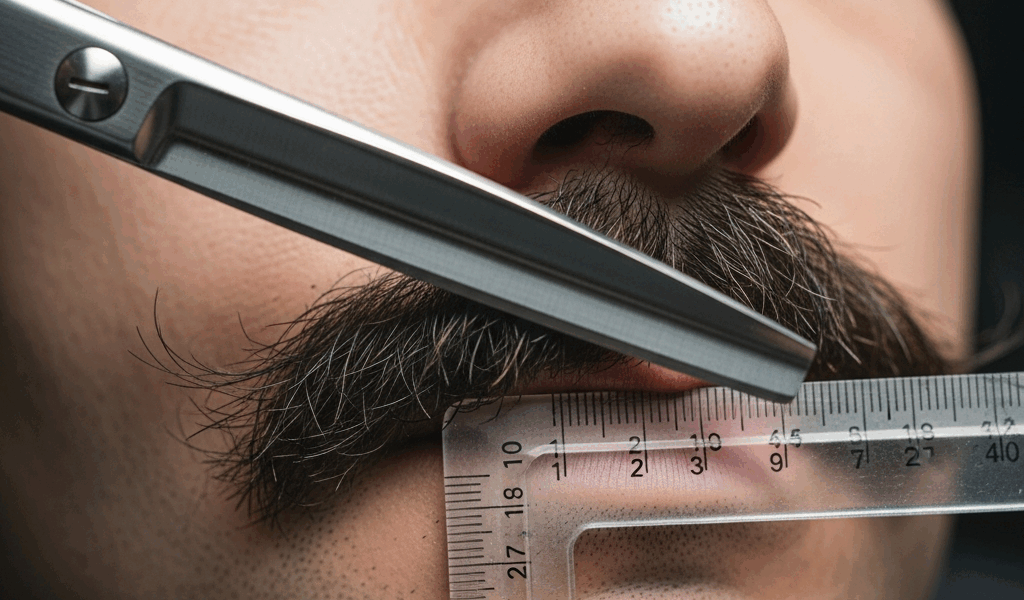
But what is the width standard, exactly? In essence, it’s a single rule: your mustache cannot extend beyond the corners of your mouth. But it’s much more than that — it’s the one rule that trips up more service members than any other grooming regulation on the books.
The Army’s AR 670-1 spells this out plainly. Same language shows up in Air Force DAFI 36-2903. Marine Corps MCO 1020.34 says it too. Coast Guard, Navy — same constraint. The regulation doesn’t give you a millimeter measurement because it doesn’t need to. Your own mouth is the measuring device.
Here’s the self-check method that actually works:
- Stand in front of a mirror in good light
- Place one finger vertically at the corner of your mouth where your lips meet
- Look at where your mustache outer edge sits relative to that finger
- If it extends past the finger, you’re over regulation width
That finger is your reference point. Some guys pull up the selfie camera on their phone and mark the lip corners with a stylus on the screen. Whatever gets the job done. The point is knowing exactly where you stand before you touch a trimmer.
Why Trimming Width Is Trickier Than Trimming Length
Probably should have opened with this section, honestly. Most guys fail at width correction because they attack the wrong plane entirely.
Here’s the geometry problem nobody explains. Your mustache grows outward and downward at the same time — not straight down from the root. The outer edge curves slightly downward and outward as it lengthens. When you trim the top line, you’re not cutting the widest part. The widest part is lower, where those hairs have curved out the most.
I made this mistake myself. Two full weeks of trimming the top ridge, convinced I was solving the width issue. Nothing changed. The outer edge still hung past my lip corner. I was cutting the wrong surface the entire time. Don’t make my mistake.
The real overhang happens on the vertical plane at the outer edge — the side of the mustache facing your cheek. That’s what needs work. Length trimming is vertical. Width trimming is the lateral boundary. Two completely different things.
Step-by-Step Fix for a Too-Wide Military Mustache
This is the actual corrective technique. First time through takes maybe twenty minutes.
Start with a dry mustache. Wet hair sits flatter and shorter than it actually is. You’ll cut more than you intend. Let it air dry completely or hit it briefly with a blow dryer in the direction it naturally grows.
Comb the mustache outward. Use a fine-tooth comb — a barber’s steel comb, not a wide-tooth brush. Push the hairs outward and slightly upward, away from your face. This reveals the true outer edge and the actual width you’re dealing with. Most guys are surprised. It’s wider than it looks lying flat.
Locate your lip corner reference. Finger at the corner of your mouth again. Look in the mirror. That’s the sight line you’re targeting. Lock it in before you pick up anything sharp.
Use a detail trimmer or small precision scissors. The Wahl Detail trimmer runs about $40–50 and is the standard tool for this job. The Andis Slimline Pro is nearly identical — $35–45 — and I’m apparently someone with dry, coarse hair and the Andis works for me while the Wahl’s blade guard never sits quite right on my skin. Either one gives you the control you need. Hold the trimmer vertically, blade parallel to your lip line, positioned at the outer edge. The side of the mustache — not the top surface.
Make small passes. One pass. That’s it. Trim a small vertical strip along the outer edge, roughly the width of a toothpick. Step back. Check the outer edge against your lip corner reference. You should see it move inward slightly — not dramatically.
Repeat in small increments. Another small pass. Check. Another pass. Check. Overshooting width is brutal to fix — a gap in your mustache is far more visible than a slightly imperfect outer edge, and it takes weeks to fill back in. Patience here is not optional.
Final regulation checkpoint. Comb the mustache out one more time and place your finger at your lip corner. The outer edge should align with that finger or sit just barely inside it. A tiny margin is ideal. Perfect alignment is hard to hold as it grows back out.
What to Do If You Already Trimmed Too Much
You created a gap. The outer edge is sparse or just gone in spots. Fixable — but it requires time and a completely different mindset.
Stop trimming immediately. Seriously. Let the entire mustache grow without any shape work for two to three weeks. Mustache hair grows at roughly one-tenth of an inch per week — that’s genetics and age dependent, obviously. At that rate, you’re looking at a few weeks before the sparse area fills in enough to work with.
While you wait, maintain the rest of it. Trim the top line if it’s curling into your mouth. Clean up the center if needed. Just leave the outer edge and the over-trimmed zone completely alone. That zone gets no attention until it catches up.
A slightly sparse outer edge during recovery is less noticeable than visible asymmetry. Most people clock unevenness before they notice sparse patches. Use that to your advantage and resist the urge to “fix” anything.
Tools That Make Width Trimming Easier
While you won’t need a full barber kit, you will need a handful of specific tools to do this right. The Wahl Detail trimmer ($40–50) is the standard — small, precise, holds a charge well. The Andis Slimline Pro ($35–45) is the alternative and just as capable. That’s what makes both of these endearing to us guys doing precision grooming work at home — no learning curve, just control.
A barber’s steel comb runs $8–15 and lasts essentially forever. Buy one if you don’t have one. It’s worth it.
Always check the regulation after any trim. Not before. Before is completely useless. After is the only checkpoint that matters — and the only one that determines whether you’re squared away or not.


Leave a Reply