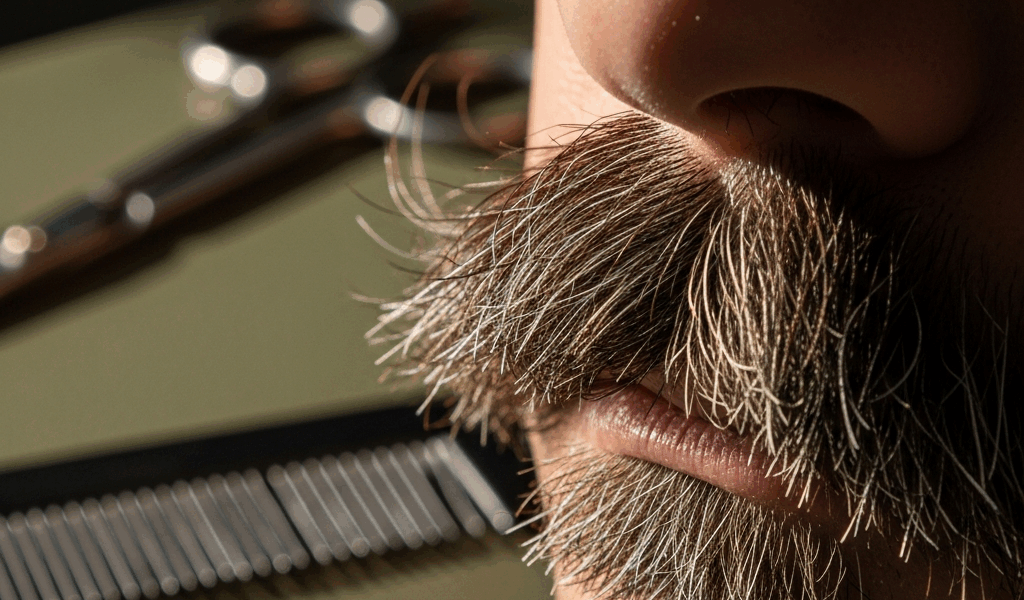
Why Military Mustaches Turn Gray Faster
Fifteen years watching fellow officers transition from full dark staches to salt-and-pepper disasters taught me something most civilians never consider. Military life accelerates graying in ways that have nothing to do with age alone — it’s the specific pressures of service that compress the timeline.
Genetics loads the gun. Stress pulls the trigger. Your parents went gray early? You probably will too. But add deployments, irregular sleep schedules, constant physical demands into that mix, and suddenly the timeline shrinks in ways that catch you off-guard. I noticed this hard when a thirty-eight-year-old master sergeant showed up with more salt than pepper in his regulation stache while his brother — same genes, same parents — stayed mostly dark at forty-two working civilian IT.
Military life introduces specific gray-accelerators that civilian life doesn’t touch. Deployments disrupt sleep cycles for months at a time. Physical training creates oxidative stress on your entire system. Even desk work in military environments carries psychological load — the kind that increases cortisol and depletes hydrogen peroxide in hair follicles. That peroxide is literally what keeps hair pigmented. Lose that balance, and melanin breaks down faster.
Age alone tells part of the story. But here’s what I should have learned sooner — the military environment compounds it in ways that matter. You’re not just getting older. You’re doing it under conditions that specifically stress your body and immune system in ways that directly affect hair pigmentation.
Best Dyes for Military Mustaches with Mixed Gray
Not all beard dyes work for mustaches — your lip area is sensitive. You’re eating, drinking, and putting things near your mouth constantly. Standard beard dyes designed for full-face coverage are overkill and sometimes irritating.
Just for Men Beard runs $8-12 and works fine, but it’s formulated for thicker coverage than you actually need. For mustaches, you need precision. The Bigen Mustache Color ($6-10) was designed exactly for this problem — concentrated, easier to apply to a smaller area, and comes with a fine applicator brush instead of the chunky applicators on full-beard products. I’ve seen more mustaches stay regulation-compliant with this product than any other option out there.
Thorne Research supplements and other nutritional brands won’t help here — you need actual color depositing in the hair shaft. Dyes work by opening the hair cuticle and depositing pigment molecules. That’s chemistry, not nutrition.
Color matching matters more than you’d think. Matching dark brown hair with white hairs coming through? Get a shade slightly darker than your natural color — not black, which looks artificial under military lighting. Closer to medium brown? Aim for the natural brown formulas. Test on a small hidden section first. I made the mistake of applying full-strength Bigen to my entire stache the first time and looked like I was wearing a costume for three days.
Permanent versus semi-permanent — that’s the real choice. Semi-permanent (most beard dyes) lasts 4-6 weeks and fades gradually. Permanent dyes last longer but are harder on facial hair and can look harsh if the color shifts. For military appearance standards, semi-permanent works better because graying happens gradually anyway, and you won’t hit sudden obvious regrowth lines.
Application safety matters because staining is visible. Keep petroleum jelly or barrier cream around your lip line before applying — dye stains skin permanently for a few days if it contacts exposed skin. Use an old towel you don’t care about. The staining isn’t permanent on skin — it fades in 3-4 days — but it’s visible during your work week, which defeats the purpose of looking regulation-sharp.
How to Apply Dye Without Damaging Your Stache
Probably should have opened with this section, honestly. Application technique separates guys whose staches look professionally colored from those who look like they dyed their own hair in a gas station bathroom.
Preparation takes five minutes. Brush your mustache downward and to the sides to identify all the white hairs. Wet the stache lightly with cool water — this opens the cuticle slightly and helps color deposit evenly. Apply barrier cream around your mouth, upper lip, and under the mustache where skin is exposed. This prevents staining that’ll compromise your appearance for days.
Mix only what you need. Most beard dyes come as powder-plus-developer, and the typical packet colors a full beard. For a mustache, mix about one-quarter of the packet into a small ceramic or plastic bowl. Never use metal — it reacts with the dye chemicals. I learned this when my first batch turned greenish-gray.
Application happens with a fine brush or the applicator tip provided. Section your mustache into three parts: left side, center, right side. Apply dye thoroughly to one section, making sure every white hair gets coated. Work systematically. Saturate the outer edges where gray shows most. The inner parts above your lip need less because they’re hidden.
Timing is critical — most dyes need 5-15 minutes. Check the package. Don’t guess. Under-processing leaves white hairs untouched. Over-processing damages hair structure and makes your stache feel brittle. Set a timer. I’ve seen guys leave dye on for thirty minutes thinking more time equals better color — it just dries out the hair and sometimes causes mild skin irritation.
Rinsing requires cool water only. Warm water opens the cuticle further and allows color to escape. Rinse until water runs clear. Use a gentle, sulfate-free shampoo made for color-treated hair. Pat dry carefully — don’t rub. Apply a leave-in conditioner designed for beards to seal the cuticle and lock color in. This extends your color life to 6-8 weeks instead of 4.
Common mistakes cluster around three areas: uneven application leaves streaky results — fix this by applying a second thin coat immediately if you notice patchy coverage. Over-processing makes hair feel straw-like and sometimes causes breakage — timing discipline prevents this entirely. Skin staining makes you look sloppy during your first week back at work — petroleum jelly barrier prevents this.
Non-Dye Options That Actually Work
Dyeing isn’t for everyone. Some guys have sensitive skin. Others dislike the maintenance cycle. Some worry about chemicals near their mouth constantly. Alternatives exist and actually deliver results if you’re strategic about which one fits your situation.
Darkening beard shampoos deposit color gradually with each wash. Beard Brand Darkening Shampoo and similar products ($15-25 per bottle) work by including color pigments that rinse out slightly, but a portion stays in the hair shaft. It’s gentler than permanent dye — you won’t get dramatic results immediately, but over two weeks of regular use, noticeably grayed staches actually darken. The advantage is obvious: it’s part of your normal routine. The disadvantage: results are subtle and require consistent use.
Color-depositing conditioners are the easiest alternative for maintenance-conscious guys. Kérastase and similar luxury brands make these ($30-50), and beard-specific versions like Beard Brand’s Thickening Conditioner deposit color while conditioning. Again, subtle results. But if you’re dyeing every six weeks anyway, alternating with a darkening conditioner in between extends your color life by two weeks.
Thickening products that add visual density actually work well for salt-and-pepper mustaches. A thickening fiber product like Toppik for Beards ($20-30) coats existing hair and fills in apparent thinning. Gray hair often appears finer than dark hair — thickening products make your stache look fuller and darker simultaneously without any chemical processing. The tradeoff is straightforward: it washes out daily and you need to reapply, but it’s zero-damage and works within military grooming standards.
Beard growth supplements deserve honest discussion — they won’t fix existing gray, but stronger, faster-growing facial hair looks darker because you maintain it more frequently and the hairs are healthier. Biotin, collagen peptides, and B-vitamin complexes show results over 8-12 weeks. They cost $15-40 monthly but address the underlying follicle health.
Maintenance Schedule to Keep Color Looking Fresh
Color application is day one. Maintenance determines whether your mustache looks professionally groomed or fades into a mess by week four.
The first week after dyeing, use only cool water and gentle beard wash. Hot showers open the cuticle and leach color — your stache needs those first seven days to fully stabilize the pigment. Use conditioner daily. This matters more than most guys realize.
Week two through four is your color-safe window. Hair still looks rich and dark. This is when most of your work happens and regulations matter most. During this period, maintain with sulfate-free beard wash twice weekly and color-depositing conditioner on alternate days. The conditioner refreshes fading color before it becomes noticeable.
Week five, you’ll start seeing white hairs emerge around your edges and center. This is normal. Some guys reapply a light layer of dye at this point — just the visible white areas, not the whole stache. Takes five minutes and extends your color by two weeks total.
Full reapplication happens every six to eight weeks, depending on your natural graying rate and how fastidious you are about touch-ups. Create a calendar reminder. Don’t wait until you’re obviously half-gray for a military inspection. The goal is nobody notices your stache changes at all — they just see a regulation-sharp, professionally maintained appearance.
Daily maintenance outside of dyeing cycles involves beard oil, conditioning, and careful brushing. A quality beard oil like Beardbrand ($20-30) keeps hair soft, maintains color vibrancy, and prevents the straw-like appearance that screams “this guy tried to dye his beard at home.” Brush downward each morning — this distributes natural oils and keeps color even visually.
Your military mustache reflects your attention to standards. Salt-and-pepper graying is normal. Letting it go untended isn’t. A simple dye routine, realistic maintenance schedule, and quality conditioners keep you looking sharp without making grooming your second job.




Leave a Reply